
Why plants can regenerate
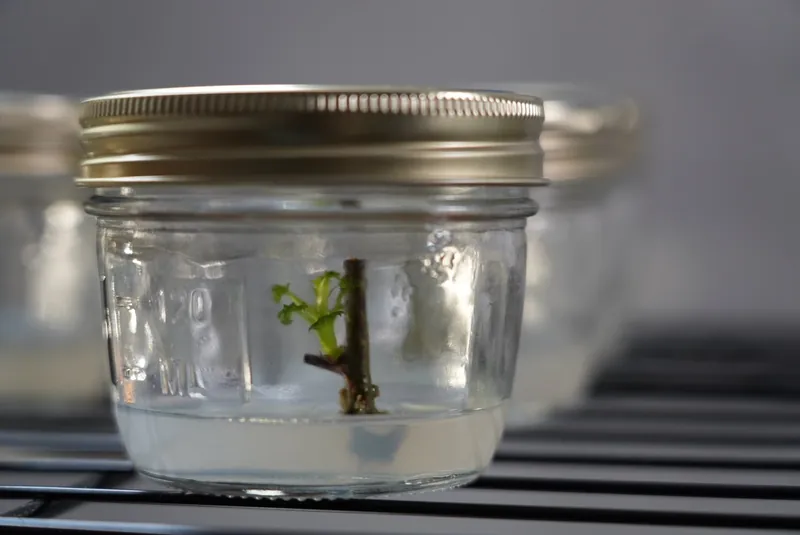
By the end of this lesson
- Explain developmental plasticity without promising universal regeneration
- Identify factors affecting regenerative response
- Distinguish a successful example from a guarantee
See it
Plant regeneration is possible because plant cells and tissues can retain remarkable developmental plasticity. The historical idea of totipotency helped motivate tissue-culture research, while modern work shows that regeneration depends on cell state, tissue competence, signals, and developmental context rather than a simplistic promise that every cell will regenerate a whole plant.
Understand it
Explain developmental plasticity without promising universal regeneration
Regeneration is a biological capacity, not a guarantee for every cell or every species.
Regeneration depends on biological capacity and suitable conditions, not a guarantee that any cell will form a whole plant.
Identify factors affecting regenerative response
Hormonal and developmental signals can influence whether cultured tissue forms shoots, roots, callus, embryos, or fails to respond.
Tissue competence, physiological state and developmental signals influence the response to culture.
Distinguish a successful example from a guarantee
The explant and its physiological state strongly influence what is possible.
A failure describes a particular material and treatment, rather than disproving the wider biological capacity.
Worked example
Two tissues from the same plant receive similar treatment. One forms shoots and the other does not. This does not disprove regeneration: their developmental state and ability to respond may differ. Record the tissue and response instead of assuming every cell should behave alike.
Explain your decision before opening the worked reasoning below.
Show the worked reasoning
Developmental plasticity is conditional; universal promises about every cell ignore tissue competence and context.
Evidence for one material is informative but does not guarantee the same response in another genotype or tissue.
Avoid saying “every plant cell can always become a whole plant.” That overstates the biology.
Try it
One explant fails to form shoots. Which conclusion fits the example?
Use the worked example above to explain your answer in your own words before taking the quiz.
Lesson quiz
Assessment version: 2026-10-15-v2. Previous reading-completion markers are retained. This revised quiz has its own result.
Apply it
Use the worked example to write a short decision record: what did you observe, which rule did you apply, and what would you check before acting?
Completion marks reading progress, not a quiz pass or professional certification.